

Life Expectancy in Northern Ireland 2022-24
Date published:
The Department of Health today published the statistical report 'Life Expectancy in Northern Ireland 2022-24'. The Department of Health are the official producers of life expectancy figures for Northern Ireland. This report presents the latest estimates of life expectancy, healthy life expectancy and disability-free life expectancy. The report explores the extent to which mortality within certain age groups and causes of death contribute to the observed variations in life expectancy over time, in addition to inequality gaps between sexes, deprivation levels, Health and Social Care Trusts and
Key Findings
Current Life Expectancy Estimates
- In 2022-24, life expectancy in Northern Ireland (NI) was 78.8 years for males and 82.6 years for females.
- Since 1980-82, life expectancy at birth has increased by 7.1 years for females and 9.6 years for males. However, over the last ten years, life expectancy growth has slowed for males while the slowdown in female life expectancy has been evident over the last twelve years.
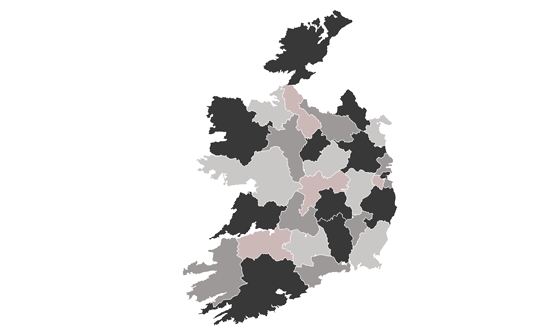
- Among the 11 Local Government Districts (LGD), male life expectancy was highest in the Lisburn & Castlereagh LGD (80.5 years) and lowest in the Belfast LGD (76.5 years). For females, life expectancy was highest in the Lisburn & Castlereagh and Fermanagh & Omagh LGDs (both 83.8 years) and lowest in the Belfast LGD (80.5 years).
- Among the five Health & Social Care (HSC) Trust areas, male and female life expectancy were highest in the South Eastern HSC Trust (79.7 years and 83.2 years respectively) and lowest in the Belfast HSC Trust (77.1 years and 81.1 years respectively).
Decomposition of Life Expectancy Trend over the Last 5 Years
- While life expectancy at birth has increased by 0.1 years for males and 0.2 years for females since 2018-20, the changes were not statistically significant.
- A decrease in mortality among males aged 70 years or more, had the largest positive contribution to the change (0.2 years), while increased mortality in males aged 40-69 had the largest negative contribution (-0.2 years).
- While reduced mortality, mainly from COVID, Cancers, and mental & behavioural disorders, contributed to a male life expectancy increase of 0.6 years, this increase was largely offset by increased mortality from a range of other causes.
- There was little change in female mortality across all age groups. Any minor positive changes among some ages (most notably 80-89 year olds), were mainly negated by small negative changes for other ages (most notably 60-69 year olds)
- An increase of 0.5 years in female life expectancy, mainly due to lower mortality from deaths due to COVID, Cancers, and mental & behavioural disorders, was largely offset by 0.3 years due to reduced mortality mainly from diseases of the digestive system, accidental causes and a range of other causes.
Male-Female Gap
- In 2022-24, females in NI could expect to live 3.8 years longer than males.
- Across all age groups, male mortality was higher than that of females, most notably within the 70-79 years age group which contributed 0.8 years to the gap.
- Higher male mortality from the combination of circulatory disease (1.1 years), cancer (excluding breast) (1.1 years), and accidental deaths (0.6 years) accounted for 2.8 years of the gap.
Deprivation Gap
- In 2022-24, males living in the 20% most deprived areas of NI could expect to live 74.6 years, 7.2 years less than those living in the 20% least deprived areas (81.8 years).
- Female life expectancy in the 20% most deprived areas was 79.4 years, 5.5 years fewer than females in the 20% least deprived areas (84.9 years).
- For both males and females, mortality across the majority of causes of death was higher in the most deprived areas than in the least deprived.
- Higher mortality from circulatory disease (1.5 years), cancer (1.2 years) and accidental deaths (1.2 years) combined, contributed over half of the male life expectancy deprivation gap. There were also notable contributions from deaths due to digestive diseases (0.7 years), respiratory disease (0.7 years) and Suicide (0.7 years).
- Mortality from cancer (1.3 years) was the largest single contributor to the female deprivation gap, almost half of which (0.6 years) was due to lung cancer. Respiratory disease (1.1 years) and circulatory disease (0.8 years) also made notable contributions to the gap.
Healthy and Disability-Free Life Expectancy
- Over the last five years, Healthy Life Expectancy (HLE) decreased for both males and females, however the change for males was not statistically significant.
- Female HLE decreased by 1.9 years from 62.1 years in 2018-20 to 60.2 years in 2022-24. Over the same period, male HLE decreased by 0.8 years from 60.1 to 59.3 years however this change was not statistically significant.
- Similar to HLE, female Disability-Free Life Expectancy (DFLE) decreased over the last five years, by 2.4 years, from 59.0 years in 2018-20 to 56.6 years in 2022-24. Over the same period, male DFLE decreased by 1.2 years from 58.2 to 57.1 however this change was not statistically significant.
- Between 2018-20 and 2022-24, the male HLE deprivation gap widened by 2.9 years from 12.0 years to 14.9 years. Over the same period, there was no notable change in the female HLE deprivation gap which stood at 14.6 years in 2022-24.
- The female DFLE gap between the most and least deprived males narrowed from 12.1 years in 2018-20 to 10.0 years in 2022-24. Over the same period, there was no notable change in the gap for males which stood at 11.8 years in 2022-24.