

Martin Duffy
Download PDF
Dec 30 2025
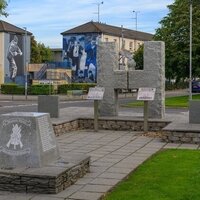
seankellypix/DepositphotosNorthern Irelands unique Troubles horror story also conceals some ingenious state manipulation of the macabre. The emerging academic sub-discipline of political hauntology explores how the past, especially lost or failed futures, can haunt the present. It thus influences political discourse and action. TheoristJacques Derridadescribes the return of the repressed or the persistence of the past in the present. In the political realm, this can manifest as a fascination with past ideologies, yearning for lost futures, or cultural and political stagnation. Arecent filmon the Northern Ireland conflict suggests political hauntology might be utilized as a concept, when considering state-actions.
Non-democratic regimes in Latin America and Africa (in particular) were oftentimes criticised for deploying hauntology as propaganda against their opponents. Eventhe threat of an avenging plaguewas invoked by one African Prime Minister (Pohambain Namibia) in his efforts to ensure re-election in 1999. Among indigenous societies the effects were potentially significant forces of social control. Evidentially, the concept might apply to efforts of state propaganda in Ulster.
It is widely known that there was a security forces black-operation colouring public consciousness about the traumascape of Northern Ireland. A BritishForces Research Unit(FRU) experimented with operations to discredit republican and loyalist paramilitaries.Operational at least by 1980, the FRU was renamed Joint Support Group (JSG) following theStevens Inquiriesinto allegations of collusion between security forces and Protestant paramilitaries.Fishers conceptual definitionof hauntology might categorize the FRU as a form of mass-manipulation. The army drew on tactics which had been utilized by its information sections in numerous post-WW2 conflicts.
In colonial settings, the British Army used military-force and psychological-tactics to quell riots, deploying martial law, and utilizing propaganda. In the riot-strewn streets of Belfast and Derry, the armys natural impulse was to select from its well-worn strategic playbook. Anything was permissible which portrayed the IRA as sinister, blood-thirsty monsters like something out of a gruesome horror movie. IRA volunteers were likened in these stills toEd Gein, the most impactful murderous sociopath of modern cinema. The news media were spoon-fed crime-scenes half-way between the gruesome movie staples ofPsychoand theTexas Chain Saw Massacre. Even everyday nationalist neighbourhoods quickly saw the consequences of terrorism. Soon there were enough live, real atrocities that the FRU stills became redundant.
Conflict experts argue all wars have mystification activities of this kind. In Northern Ireland, army techniques ranged from fabricated news stories all the way to blackmail of potential informants. Security force penetration of terrorism probably shortened The Troubles and Northern Ireland was perceived as a place of horror. Simon Aepplis new film,Operation Bogeymanexplores the intersection of the landscape and the stories it generates, informing our cinema. Pointing toRichard JenkinssBlack Magic and Bogeymen, Aeppli shows the extent of British army manipulation of horror as part of an elaborate strategy, most notably to undermine Irish republicans.
From 1971 FRU-predecessors, Military Reaction Force, Military Reconnaissance Force or Mobile Reconnaissance Force(MRF) were covert intelligence-gathering and counterinsurgency units. Teams operated until late 1972 or early 1973, tasked with tracking or killing members of the Provisional Irish Republican Army (IRA). It is alleged that the MRF killed a number of Catholic civilians in drive-by shootings. Some of these roles were then incorporated in the brief for an FRU.
AepplisOperation Bogeymanis an essay film that navigates the intersections of folklore, horror, and psychological warfare. Beginning in the filmmakers childhood home of Carrickfergus, Aeppli embarks on a personal journey through haunting landscapes and archival discoveries to reveal a past steeped in horror. The film examines a bizarre propaganda-operation in which the British army even staged fake black-magic-rituals to smear the IRA as Satanists and to undermine grassroots support.
Aepplis unique blend of video-essay and desktop-documentary explores the spectres of Northern Irelands history through landscape, archival footage, audio-interviews, and personal reflections. The film grapples with prescient themes of buried histories such as the disappeared, and the haunting legacy ofpsyops and black propaganda. It becomes apparent that the province was ripe for such hauntological exploitation. The endgame behind FRUwas to discredit the IRA.
The FRU sought to align the IRA with cultism which in itself was almost ludicrous, but probably did immiserate the local population. Notably in major urban areas and border towns, views about IRA operations varied according to the levels of inconvenience they created for residents. Local moods ebbed and flowed and media images which made IRA behaviour appear cold-blooded, significantly affected the local populations loyalties. It was old-fashioned military-strategy of undermining morale. AsAeppli puts it:
He reflects on a building which is a unique receptacle of forensic horror archiving cabinet after cabinet of grotesque curiosities:
This short-film sheds interesting light on how a traumatic landscape may be manipulated by state-forces to affect the mood of the general population and encourage despair. Government wanted to orchestrate political fatigue among dissidents and revolutionary communities. This echoessubliminal advertisingcontroversially employed in the USA. Thus, Irelands folk-horror was realized in the subtle dirty tricks of state media-manipulation. By manufacturing film and myth- the state contributed to a unique genre of folk-horror which suited its propaganda-war against the IRA.
Although largely discredited for collusion with paramilitaries, the FRU is attributed as having played a significant role in deterring terrorism. There was enormous security-force-penetration of terrorist cells. Equally, this unit contributed to a portrayal of terrorism as ghoulish and to undermining popular support. These issues are impossible to quantify but they are substantive enough to make political hauntology as explored in AepplisOperation Bogeyman, a significant area for research exploration.
Aepplis film demonstrates that state-powers may historicize and even weaponize the macabre in a propaganda war. The British army were adept in portraying the IRA and their terror-operations as inhuman. The FRU conducted clandestine activities which even allegedly involvedmock black magic ritualsdesigned to discredit the IRA. These varied from the humorous to the sublime, but the concomitant effects were to undermine the image of the IRA as a revolutionary army. This may have contributed cumulatively to the view of the IRA as cold blooded killers.
The armys campaign effectively de-humanized their opponents, and had some negative impact on the IRAs support-base. These impacts must, however, be counter-balanced with processes that were occurring at the same time, which also undermined the armys own public image. The introduction of internment without trial, the brutal treatment of teenage-rioters and finally the tragic events ofBloody Sundaywhen in January 1972 a large number of innocent civilians were killed by state forces in Derry, all served equally to destroy any status of the army as neutral forces. Aepplis film is a valuable expose of how hauntology may have impacted the IRA but there also remains scope for a larger study of how theseclandestine army activitiesaffected loyalist paramilitaries.
Ultimately, however, one must be aware that there is a far more disconcerting horror story underlying all of this distressing narrative about The Troubles. Horrific as the plans of state security services todiscredit the provinces paramilitaries,(particularly the IRA volunteers around the border areas) there was another reality, still less palatable. The most macabre thing of all was that there existed across the province deeply enmeshed groups of killers from both republican and loyalist factions. In short, there were literally hundreds of operatives capable of murder by bomb or bullet, and outside the effective control, but sometimes manipulated by the police.
No one genuinely knew what proportion of these paramilitaries and rogue security operatives were potentially psychotic or just rational killers who had no problem justifying large-scale murder of innocent civilians. The fact is that Northern Ireland possessed its own real-life splatter-film and the propaganda teams of the FRU were mimicking a genuine hate-fest. As the years progressed andtit-for-tat killings multiplied, there was enough unmanufactured horror to render almost otiose, any contrived military shocker.
References
M. Duffy. Exploring Political Hauntology: Notes from a review of Simon Aepplis Operation Bogeyman (DOCU FILMS, 65 mins. 2025) cam.ac.uk/VLE/2025.
Derrida, J. (1994). Specters of Marx: The State of the Debt, the Work of Mourning, and the New International. Routledge.
Urwin, Margaret. BRIAN NELSONBRITAINS AGENT, History Ireland, vol. 31, no. 4, 2023, pp. 4851.
Further Reading on E-International Relations
- Reflections on the Troubles and the IRA in The Secret Army
- Opinion Northern Irelands Dirty War
- Twenty-Five Years On: Northern Irelands Good Friday Agreement
- The Glasnevin Necrology Memorial: Exhibiting Irelands Dark Heritage
- Opinion Brexit and the Continued Troubles in Northern Ireland
- Reflecting on Kenneth Branaghs Belfast
About The Author(s)
Martin Duffyhas participated in more than two hundred international election and human rights assignments since beginning his career in Africa and Asia in the 1980s. He has served with a wide range of international organizations and has frequently been decorated for field service, among them UN (United Nations) Peacekeeping Citations and the Badge of Honour of the International Red Cross Movement. He has also held several academic positions in Ireland, UK, USA and elsewhere. He is a proponent of experiential learning and holds awards from Dublin, Oxford, Harvard, and several other institutions including the Diploma in International Relations at the University of Cambridge.
TagsNorthern IrelandThe Troubles