

Martin Duffy
Download PDF
Jan 25 2026
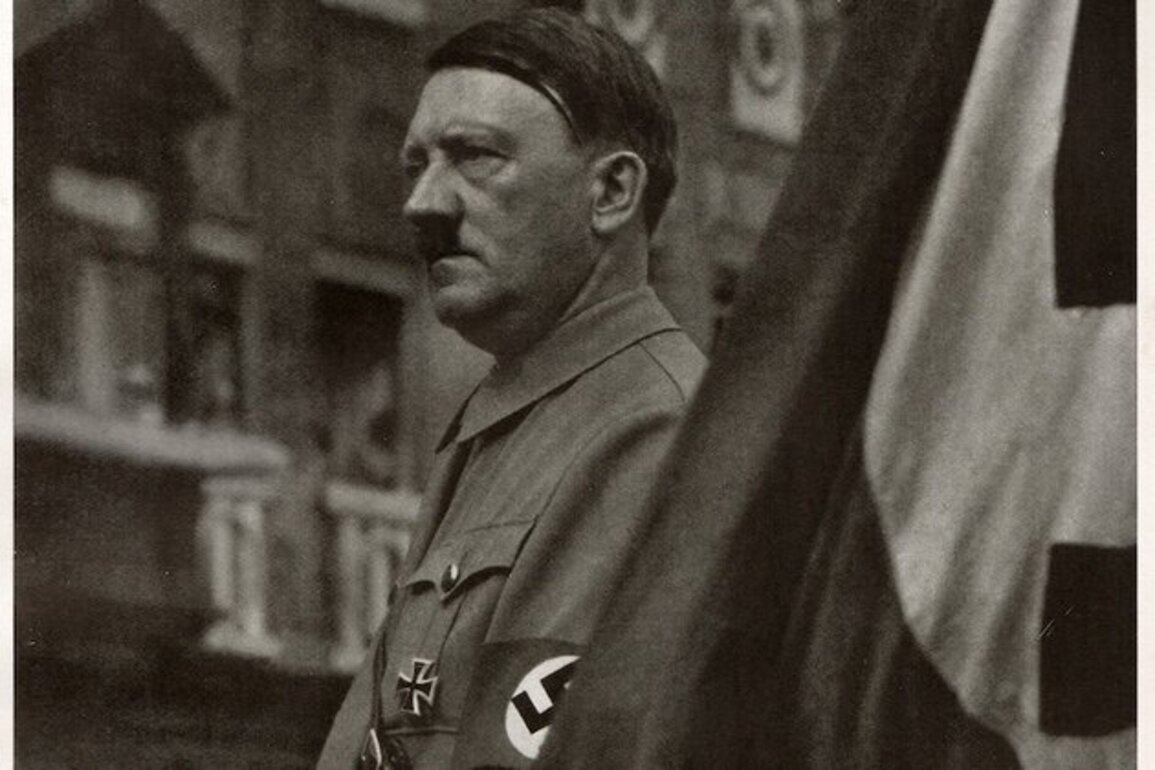
RomanNerud/DepositphotosIreland was politically divided in May 1921 subsequently becoming a Republic and a separate entity, Northern Ireland. Both territories have had fleeting experiences of indigenous fascism since the 1920s. My previous piece on archaeologistAdolph Mahrdemonstrated how the Irish state (apparently unwittingly) promoted Mahr to the directorship of its National museum in 1934. He was a man who was by any definition,a Nazi living in plain sight.This article demonstrates that bizarrely, an anchor of the British state in Northern Ireland,Lord Londonderry, was at the least, grossly misled by Hitler and his cronies. Londonderrys connections with the Nazi regime were subsequently ignored by historians. However, at the time, his apparent collusion with Fascism did not go unnoticed on his Mountstuart estate, where he contributed toambiguity in popular attitudes to Germany. Londonderrys crude interventions about Nazism alarmedBelfasts Jewish community.
It should be noted, from the outset, that fascism in Northern Ireland had a notable inter-war presence, with groups like Oswald MosleysBritish Union of Fascists(BUF). They spawned theUlster Fascists, attracting loyalists with antisemitism and anti-independence messages. The Ulster Fascists were an autonomous wing of Mosleys BUF who actually opposed partition. Later, theNational Frontgained loyalist sympathy, also exploiting territorial flags. Meanwhile, in Southern Ireland, in the 1930s and 1940s, theBlueshirts(Army Comrades Association) andAiltir na hAisirghe(Architects of the Resurrection) adopted fascist policies and even paraded in uniform. More recently, far-right protests and anti-immigrant actions have been described as having fascist-like characteristics. They invoked fascistic elements (e.g. weaponizing respective flags) on both sides of the border. There was widespread alarm among thesmall Jewish communitiesdotted across Ireland.
These events, however, have attracted more scholarly attention thanLord Londonderryscommunications with the Nazi regime, which led him to be dubbedHerr Londonderry.A British aristocrat and former Air Minister, he certainly had significant, misguided, links with Nazi Germany.His correspondencebrims with references to personal friendships with the German leadership at a time of advancing Nazism. It is difficult not to infer that he either did not find them repugnant orhe felt there was no other way but to seek to placate them.He famously interacted with the entire Nazi hierarchy. Londonderry strongly backed appeasement, at a time when Cabinet struggled to muster political clout to oppose Nazism. Historians have subsequently been kind in presenting Londonderry as a naive figure. In fact, his overtlypro-German leaningswere exploited by Nazis to legitimize their regime. A close-reading of theperson-to-person letterswith German high rankers suggests he either accepts the authenticity of Nazism or plays along because he is torturously frightened of them.
Recent studies such asKershawandFleming, among others, have shed fresh light on Londonderrys apparently bizarre comfort level with Fascism. The bulk of Londonderrys papers are divided between the public records agencyPRONIand archives inDerry, Durham, and Ireland. Examining them, Londonderry appears to understood and did not have an antipathy towards fascism. Alternatively, he may have believed Hitler was so invincible the only possibility was appeasement and that gentlemanly dialogue might rescue Britain.
In short, we could not conclude that Londonderry wasan ideological Nazi. He was known to display the infamous Dachau military porcelain, but he was far from being a Swastika-bearing ideologue. It is probably rather than during a crucial time in world history he saw no realistic Plan B. Like statemen of the time, he believed big politics involved dialogue with dictators. Londonderry enthusiastically cultivated friendships with high-ranking Nazis likeJoachim von Ribbentrop. In 1936 he visited Germany, hada two-hour meeting with Hitlerand praised the Nazi regime, inviting Ribbentrop to his estate. He backed the notoriousAnglo-German Fellowship, promoting dialogue and understanding with Nazi Germany among British elites. Hefailed to grasp the violent, expansionist nature of Hitlers true aims, viewing Germany as a wronged nation. His efforts made it hard for parliamentarians to gain enough traction to refuse appeasement and inadvertently aided Nazi propaganda. Ironically, Winston Churchill, was a cousin of Londonderry.
Londonderry praised leading Nazis likeHermann Gring, Rudolf Hess and Hitler himself. Indeed, after his initial visit to Germany in early 1936, Londonderry made himself one of the most prominent advocates of appeasement. Owing to hisunique rapportwith senior ministers in London and Berlin, he could circumvent the diplomacy vacuum between the two states. A second meeting with Hitler inOctober 1936reawakened forces for all-out British appeasement. Following his visit to Gring, Londonderry met withPrime Minister Chamberlain. In 1938 he wroteOurselves and Germany, on Nazi grievances. Implicitly antisemitic, Londonderry believed under gentlemans rules wealthy Jews would be safe whatever catastrophe happened. The impression left byhis papersin these crucial years, is of an amateur diplomat who grossly over-rated his own importance.
More seriously, Londonderry was incapable of contemplating the horror of what Hitler and his cronies had in mind for Europe. Chamberlain flew to Germany for a meeting with Hitler atBerchtesgaden in September 1938. Eventually the conference between the four powers convened at Munich on 29 September. Londonderry was in Munich but was not offered part in the proceedings. TheMunich agreementgave Hitler the Sudeten territories and guaranteed the remainder of Czechoslovakia through the compliance of France and Italy. Chamberlain persuaded Hitler to sign the infamous, useless letter declaring their intention never to go to war. As Churchill informed Londonderry,Your policy is certainly being tried. This was probably the most disastrous oversight noticeable in Londonderrys papers, as it was obvious he thought war was averted and Europe would get back to normal.
Londonderry navely continued to involve himself in a situation he felt was peace-making but was relentlessly heading towards war.His papersshow he resumed dialogue with Gring, and with the former chancellor of Germany and fellow aristocratFranz von Papen. Londonderry also appealed to the German ambassador to London to save UKGerman relations bydenying press reports about Nazi brutality. The ambassador offered no reply but Londonderry issued a renewed call for a peace settlement in a letter toThe Times on 22 June 1939. He was not only an appeaser but his conciliation was based on fundamental misunderstanding of the realpolitik of the Nazi regime. His interventions likely delayed all-out war, by some happenchance, but they also stymied Europes preparedness to face Hitler.
His papersalso show a mental or conceptual juxtaposition in Lord Londonderrys capacity to differentiate between bad Germans (i.e. Nazis) from Germany as a whole. It is possible that he lacked such genuine grasp of international relations that he did not realise there were no good guys left. He huddled together withPhilip Conwell-Evansthe ex-appeaser who had forged links with German opposition groups, the supposedly moderateColonel Schwerinin the German general staff, and almost anyone who would listen to his high-minded call for a gentlemanly-peace.
From hispersonal lettersit is clear that Londonderry genuinely believed herepresented the spirit of the British government and people in being determined to resist any further aggression.It never occurred to him that Hitlers deceptive style left his guests with the impression that they mattered. When the Nazis concluded a pact with Stalin in August, Londonderry could not even then realise his own folly. Instead of self-reflection and realising that he had been totally misled by the boundless aspiration of Nazism, he blamed Chamberlain and Halifax.He began to writethat the British government had allowed this development of pact with the Russians to happen by delay.
Predictably the Londonderry family then faced national disgrace, although allegations that the whole family were pro-Nazi were muted. Prior to the declaration of war on 3 September 1939, the Londonderry moved back to their Northern Ireland estate,Mount Stewart. There were even rumours that they were Nazi agents or that they might have to be interned by the government, which would have been such a disgrace it could scarcely have been borne by the countrys aristocracy- at least half of whom possessed German relatives.
There are hints inhis papersthat even in the early 1940s Londonderry had hopes of apeace partyto negotiate with Hitler. He remained concerned about Soviet expansion and in face of the horror materialising across Europe, retained sympathy with German grievances. He was on a list of namescarried by Hess on his flight to Scotland in September 1940. At this stage he advocatedChamberlains replacement with Churchilland threw his energy in favour of the war effort. After 1940 he was a national disgrace, although there was such a protective culture around the family, they suffered no retribution when the worst horrors of Hitlers Germany were discovered. Even during the Nurnberg Tribunal, he offereda character reference for Ribbentrop. Perhaps he was less a Nazi-apologist than a British nationalist who thought entitled-statemen could still steer history better than elected politicians.
Further Reading on E-International Relations
- Ulsters Political Hauntology and the Forces Research Unit
- Reflections on the Troubles and the IRA in The Secret Army
- Adolph Mahr and Irelands Nazi Past
- The Dark Heritage of Holocaust Exterminators at Leisure
- Challenges in the Museological Heritagization of the Troubles in Northern Ireland
- Opinion Brexit and the Continued Troubles in Northern Ireland
About The Author(s)
Martin Duffyhas participated in more than two hundred international election and human rights assignments since beginning his career in Africa and Asia in the 1980s. He has served with a wide range of international organizations and has frequently been decorated for field service, among them UN (United Nations) Peacekeeping Citations and the Badge of Honour of the International Red Cross Movement. He has also held several academic positions in Ireland, UK, USA and elsewhere. He is a proponent of experiential learning and holds awards from Dublin, Oxford, Harvard, and several other institutions including the Diploma in International Relations at the University of Cambridge.
TagsNazi GermanyNorthern Ireland