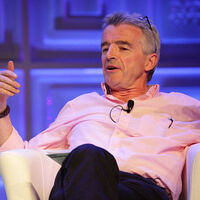


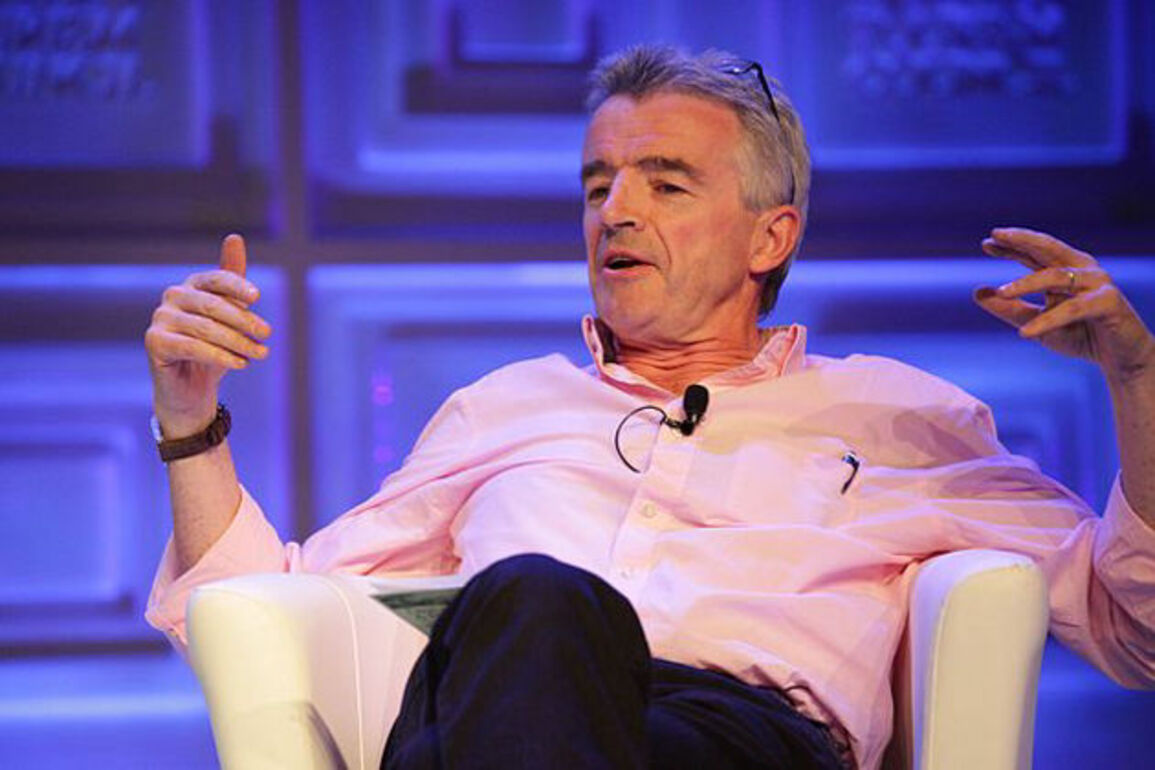
DUBLIN, Ireland: Ryanair chief Michael O'Leary says he plans to hand over his responsibilities to a "nicer" successor by 2035.
The 64-year-old, sometimes controversial airline chief, told the Financial Times that he was in talks to extend his contract for "three to five years" beyond its current end in 2028. O'Leary's existing "golden handcuffs" deal promises a 100-million-euro payout if he meets specific targets.
O'Leary said he would head for the exit in "five to 10 years", adding: "I don't want to hang around till 96 like [Warren] Buffett."
This is the first time O'Leary has confirmed his departure plans, even though he has previously sparked speculation about his retirement. He once said he wanted to stay on till the last of his teenage children had left for university in 2029.
"My contract runs out in '28," he said. "We're in talks at the moment about extending that. In '28 I'll be 67. I can't see any reason not to do another three to five-year period of time, but to my mind, I suspect we're coming to the end of it at that stage."
It is unclear whether he believes a more diplomatic approach would work. Just last month, during the company's earnings call, he attacked what he called "bullshit regulations invented by idiots in the European Parliament". He accused UK Chancellor Rachel Reeves of "taxing the shit out of everything that moves."
His attention-grabbing remarks have helped generate headlines for the company while keeping marketing costs low, including his 2009 suggestion that Ryanair might charge passengers for using the toilets.
Last year, he also floated the idea of restricting drinks at the airport lounge to two per passenger before they board.
O'Leary joined Ryanair in the late 1980s to work for founder Tony Ryan and became chief executive in 1994. Under his leadership, Ryanair has grown into Europe's largest airline, carrying more than 200 million passengers a year across Europe and North Africa.
He had already overseen much of the business before formally taking the top role and has been key in shaping the airline's culture, particularly its intense focus on cutting costs and its talent for attracting media attention.
"Succession is always a risk," he said before adding, "There's no point in pretending otherwise. If I take the top tier of management, we're all in our early sixties. We have the second tier of management in their early to mid-forties."
Some of the senior leaders "may say they have had enough in '28. By the time the second tier is in their mid-forties or early fifties, that's when they should be taking over."